The fight over Roblox and child safety is no longer just a content-moderation story; it is a design-and-accountability contest where litigation, Senate scrutiny, and Roblox’s own data have turned platform architecture, arbitration clauses, and age-gating into the core questions of duty and consequence.
The Short Version
- Hundreds of federal lawsuits allege Roblox failed to protect children from sexual exploitation; the company is seeking to route many of those claims to private arbitration rather than open court.
- Roblox’s own safety posts show a persistent volume of suspected child sexual exploitation reports to NCMEC and emphasize direct channels with law enforcement, aggressive chat filtering, and age-based controls.
- Senators have introduced bills aimed at ending forced arbitration for child-exploitation victims, explicitly catalyzed by the Roblox dispute.
- The legal battleground is shifting from “publisher immunity” to whether platform design, reporting infrastructure, and age-verification systems materially increase or mitigate risk.
What the Senate scrutiny is really about: design choices, not just bad actors
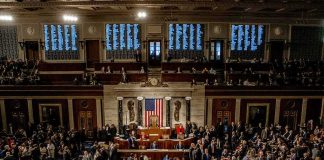
No one disputes that criminals target children online. The point of contention is whether Roblox’s product decisions—how chat, discovery, age-banding, developer tools, and off-platform migration are allowed or constrained—raise or reduce the odds that a child encounters a predator. That is why senators convened a hearing, why survivors and advocates pressed their cases, and why the litigation emphasizes platform design and reporting systems rather than just user misconduct. In parallel, Roblox highlights age checks for chat, prohibition of image and video sharing in chat, aggressive filtering, and direct escalation pathways to NCMEC and the FBI as proof that the system is engineered to reduce harm, not enable it.
Evidence does not yet settle causation feature-by-feature across cases; plaintiffs still have to prove that specific design decisions led to specific harms. But as a class, the claims have moved beyond isolated anecdotes. Reporting identified more than 180 federal lawsuits centralized before Judge Richard Seeborg, alongside a company strategy to compel arbitration under user terms that waive class actions and court rights. The arbitration posture matters because it shapes the discovery record the public can see—and, by extension, the policy lessons lawmakers can draw.
The legal posture: arbitration at the front door, Section 230 at the back
Two legal frameworks define the terrain. First, arbitration. Roblox’s standard terms contain a bolded waiver of the right to bring an action in court, individually or as a class; the company has moved to compel arbitration in the consolidated federal litigation, while plaintiffs are fighting those motions and some senators are proposing to bar forced arbitration for minors in child-exploitation cases. This is not yet resolved law; enforceability will turn on state contract doctrines for minors, federal statutes, and case-specific assent records. But as a practical matter, successful motions to compel would privatize disputes, constraining the flow of facts into the public domain.
Second, intermediary liability. Platforms typically invoke Section 230 to resist being treated as the publisher of user content. Courts, however, increasingly separate claims about publication from claims about independent product design and safety infrastructure. In one Ninth Circuit ruling, negligence-per-se and product-defect theories tied to “reporting-infrastructure design” were allowed to proceed past Section 230, even as publication-rooted claims were barred. That distinction is central here, because many Roblox suits allege failures in age verification, recommendation, and communication architecture—systemic choices, not just moderation misses.
Roblox’s safety case: age checks, filtered chat, law-enforcement pipes
Roblox’s public materials describe a safety stack built around three pillars: prevention, monitoring, and escalation. Prevention includes disabling direct image or video sharing in chat, filtering for sexual content and personally identifiable information, and requiring age checks for chat features that aim to confine communications to similar age groups or “trusted” connections. Monitoring blends automated detection with human review across text and voice for signals of grooming or endangerment. Escalation relies on direct channels to NCMEC and the FBI, with Roblox asserting it proactively reports suspected child sexual exploitation as required by U.S. law. The company has also announced global rollout of facial age checks for chat, alongside additional measures that further limit cross-age communication and tighten defaults for the youngest cohorts.
These mitigations are not trivial, and some—like prohibiting image sharing in chat—attack a core vector for abuse. But they also imply a concession: age-mixing and communication pathways are non-trivial risks that require architecture-level controls, not just after-the-fact moderation. The open question is efficacy at scale. Roblox’s disclosures emphasize both the volume of suspected-exploitation reports routed to NCMEC and the company’s low threshold for flagging; critics argue high counts reflect unaddressed harm, whereas Roblox frames them as evidence of aggressive compliance. The numbers, in isolation, can fuel either narrative; what matters is how many translate into law-enforcement action, arrests, or prevention—a metric neither side has comprehensively supplied.
The plaintiffs’ theory of the case: design, discovery, and migration risk
Plaintiffs claim Roblox’s core mechanics—discovery surfaces, chat affordances, and developer-created experiences—make it too easy for adults to initiate and migrate contact. In that account, grooming starts with in-game messaging, moves toward third-party apps where image/video exchange is easier, and exploits status signals or virtual currency to manipulate minors. The litigation seeks to connect those dots with specificity, feature by feature. At this stage, however, these remain allegations rather than adjudicated findings; causal proof will require discovery on internal testing, safety tradeoffs, and enforcement logs. While the Senate hearing amplified survivor testimony and policy critiques, the evidentiary record in court is what will establish what Roblox knew, when it knew it, and how it weighed growth against safety controls.
One related thread is whether developer tools can bypass central safety systems. Roblox insists that platform-wide filters and policies govern all communications; critics counter that custom experiences can create side channels or social funnels the central filters do not fully neutralize. Resolving that claim will require technical audits and internal enforcement data—ideally by independent experts operating under protective orders that preserve privacy while allowing rigorous analysis.
What the numbers do—and don’t—tell us
Prevalence statistics demand careful handling. Roblox has cited large volumes of suspected-exploitation reports to NCMEC; by the company’s accounting, it deliberately errs on the side of reporting at low thresholds, which means these are not equivalent to confirmed crimes or prosecutions. Conversely, a lower report count is not proof of safety; it may signal under-detection. Outside the Roblox context, a large meta-analysis estimated one-year prevalence of online child sexual exploitation and abuse around 8.1% across digital environments, with online solicitation near 12.5%—reminders that the baseline risk landscape is broad and not limited to any one platform. None of that absolves or convicts Roblox; it clarifies that evaluating platform-specific responsibility requires denominators, exposure windows, and longitudinal outcomes tied to product changes.
Policy direction: transparency, measurable safety, and the arbitration question
Three policy moves would create sharper accountability without presupposing liability. First, audited transparency: require independent, privacy-preserving audits of age estimation accuracy, cross-age messaging rates, migration pathways to third-party apps, recidivism of banned accounts, and the post-change trend lines after interventions like facial age checks. Tie disclosure to standardized definitions so platforms cannot cherry-pick metrics. Second, safety by design standards: codify guardrails—like image/video restrictions in youth spaces, strict default bans on adult-minor direct messaging without verified real-world ties, and friction for off-platform linking—that have technical measurability and user-experience consequences. Third, clarify the status of arbitration for minors in exploitation cases: if Congress intends children to have public redress, the statute should say so unambiguously and retroactivity rules should be explicit to avoid years of threshold litigation.
Courts will continue to police the Section 230 line between publication and product design; plaintiffs, for their part, increasingly craft claims that sound in product safety and reporting-infrastructure defects, where some appellate courts have allowed cases to proceed. The net effect is predictable: more discovery into how platforms test, measure, and decide safety tradeoffs—and fewer places to hide behind generic “we moderate content” defenses.
Roblox: Hawley Says He'd 'Love to' Subpoena CEO After First-Ever Senate Hearing on Gaming Platform's Safety Issues and Child Sexual Exploitation Litigation https://t.co/kEcRJwmzgw
h/t @EthanEhrenhaft & @rebeccamkern$RBLX
— The Capitol Forum (@Capitol_Forum) November 19, 2026
The bottom line for families—and for Roblox
For families, the near-term guidance remains practical: enable the strictest parental controls, assume determined adults will try to migrate conversations off-platform, and teach children that any request to move to another app is a red flag. For Roblox, the strategic question is whether its safety posture is merely performative or demonstrably preventive. Age-gated chat, no images in chat, and direct law-enforcement channels are the right direction; sustained, independently verified reductions in adult-minor contact and grooming indicators would be the proof. The litigation and Senate interest ensure that those proofs, not promises, will decide this platform’s next chapter.
Sources:
youtube.com, about.roblox.com, sfchronicle.com, reuters.com, en.help.roblox.com, supremecourt.gov, ncmec.org, pmc.ncbi.nlm.nih.gov, commission.europa.eu