Mass protest is not a referendum and not a legal brief; it is a civic signal. The No Kings mobilizations signaled something real: unusually large, geographically diffuse, and largely peaceful crowds coalesced around the claim that President Trump’s second-term agenda concentrates executive power in ways they see as antithetical to democratic norms—while the administration and its allies cast the same agenda as a democratic mandate to rein in an unaccountable bureaucracy.
At a Glance
- Independent crowd researchers documented exceptionally large, nationwide No Kings turnouts; organizer figures were higher, but the scale is not in serious dispute.
- Events spanned thousands of rallies across nearly every state, emphasizing geographic breadth over a single flagship march.
- Police in New York City and Washington reported no protest-related arrests during key No Kings dates, and national coverage described the actions as largely peaceful.
- Protesters framed their cause as defending democratic norms; the White House and allied thinkers defended a more assertive presidency as the very expression of democratic choice.
What the mobilization actually shows
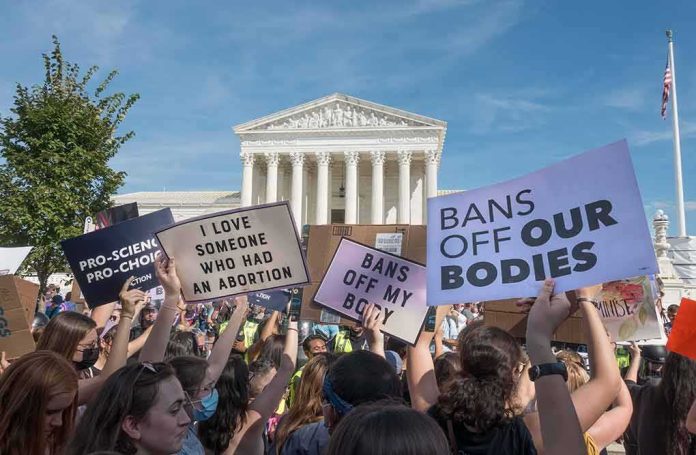
First, the scale. Organizers and allied groups claimed more than five million participants across roughly 2,100 June events; an October round was pitched as even larger. Those are advocacy numbers. The stronger piece of evidence is the Crowd Counting Consortium’s independent estimate: two to 4.8 million attendees across more than 2,000 rallies on June 14, derived from media reports, photographs, videos, and organizer accounts—a method that has become the default in the field since the 2017 Women’s March. The Consortium’s range is still historically large for a single-day, dispersed protest wave. Crowd counts at non-ticketed events are famously imprecise, but the core point holds: this was not marginal.
Second, dispersion and conduct. Coverage described No Kings actions in nearly every state and, critically for claims of democratic stewardship, largely peaceful execution. Police in New York City and Washington, D.C., reported no protest-related arrests during the October weekend that featured marquee speeches; NPR’s synthesis echoed the “mostly peaceful” portrait. That does not validate every allegation from a stage, but it does corroborate that the movement mobilized within the lanes of public-order norms.
What protesters argued versus what the White House argues
No Kings speakers and partner groups framed their cause in constitutional register—warnings about authoritarian drift, the rule of law, and the independence of science and civil society. Some speeches offered sweeping accusations untethered to case numbers or formal documents; that is common on a protest dais and, by itself, not dispositive of the underlying claims. What can be assessed, and should be, is the structural clash of theories of democratic authority animating the confrontation.
President Trump has consistently cast his second-term program as the popular restoration of self-government. In his inaugural address he described the election as a mandate to “give the people back their faith, their wealth, their democracy, and, indeed, their freedom,” and he presented early executive orders as the first step in a “complete restoration of America.” In a subsequent address to Congress, he argued for reclaiming power from an “unaccountable bureaucracy” to “restore true democracy.” Supporters, including advocates of the unitary-executive theory, contend the Constitution vests executive power in a single elected official who must be able to direct the branch to honor voters’ choices.
The mechanism at issue: presidential power, fast policy, and administrative control
The hinge is not whether a president may issue executive orders—every modern president does—but how far such directives can reach when they collide with statutory schemes, civil-service protections, and the procedural safeguards of administrative law. Trump’s allies describe a legitimate effort to translate an electoral mandate into policy by accelerating decision rights at the top of the executive branch, reorganizing agencies, and curbing what they view as policymaking by career officials. Reporting throughout the term has documented an aggressive reliance on executive action across border, citizenship, and other domains, consistent with that vision. Whether that is democracy-enhancing or democracy-eroding depends on one’s account of accountability: ballot-box authorization versus institutional constraints.
Protesters, by contrast, worry about the quality of the guardrails when speed and centralization dominate. The fear is not executive orders per se but the erosion of checks: weakened internal dissent channels, compressed notice-and-comment windows, personnel moves that chill independent expertise, and a sharper posture toward the press and civil society. Those concerns can be tested empirically—through inspector-general reports, litigation outcomes, and rulemaking records—but the protest movement’s immediate contribution is agenda-setting: forcing sustained scrutiny of how the machinery is being reconfigured, not merely what outputs it produces.
What counts as evidence in a fight like this
Three different metrics often get conflated in public debate. Mobilization measures how many people will leave their homes to act collectively; the No Kings numbers, even at the low end of independent estimates, demonstrate unusual mobilization. Public opinion is broader—surveys and elections—and cannot be inferred directly from crowd size. Proof of specific misconduct is narrower still: documents, orders, case law, inspector-general findings. The first is a loud signal; the second is a barometer; the third is a ledger. Treating them as interchangeable leads to brittle arguments on both sides.
For readers who prize institutional clarity, the right questions are concrete. If the claim is undue pressure on scientific agencies, look for directives constraining communications, grant patterns, or advisory-board purges—and match them to statutes and court results. If the claim is rightful presidential control, enumerate where Article II authority is textually strong and where Congress has cabined discretion. Executive-branch theory debates are not abstractions; they cash out in procurement rules, asylum screenings, environmental permitting, classification authorities, and the employment rights of civil servants. That is where rhetoric meets law.
https://twitter.com/CyndyL921/status/2111604272723013897
How to read the road ahead
Expect two dynamics to persist. First, scale begets scale: visible turnouts can galvanize supporters and attract cross-network participation, especially on the political left, which scholarship suggests is more likely to escalate protest as its own side’s numbers rise. That does not decide outcomes, but it keeps a spotlight on process. Second, institutional adjudication will lag the politics. Courts, inspectors general, and Congress move on longer clocks than rallies or executive orders. In that gap, the contest over narrative—mandate versus overreach—will continue to shape how the public understands legitimate authority.
What this means for citizens who care about democratic practice
Large, peaceful protest waves and a presidency asserting maximal control over the executive bureaucracy are not mutually exclusive features of democracy; they are often co-present in periods of institutional renegotiation. The No Kings mobilizations did not prove that particular actions violated law, and the White House’s mandate claim does not immunize policy from legal constraint. The healthy posture for citizens is disciplined curiosity: honor the civic signal embedded in the crowds, then do the harder work of tracing specific allegations to the documentary record and, just as rigorously, testing the administration’s legal theories against the separation of powers as written and as practiced.
Sources:
britannica.com, cnn.com, en.wikipedia.org, usatoday.com, english.ahram.org.eg, fox29.com, apnews.com, millercenter.org, aljazeera.com, pbs.org, npr.org