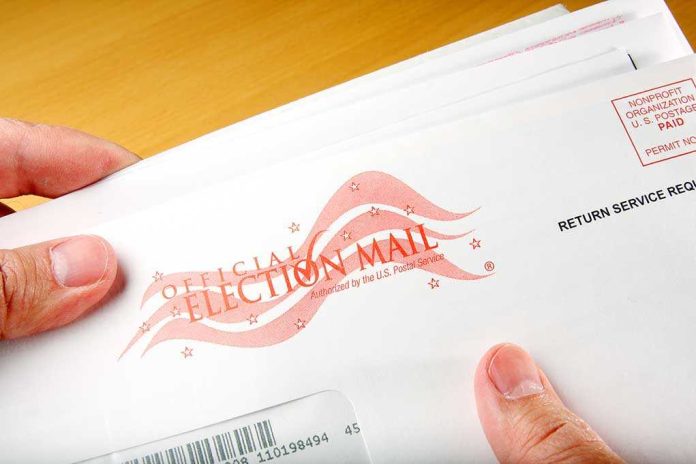
Incidents like suspicious white-powder letters trigger the same machinery that protects election infrastructure from real threats: evacuations, hazmat protocols, forensic testing, and federal investigations. Even when substances prove harmless, the operational impact is real, and the intent to disrupt election administration is unmistakable.
At a Glance
- Election offices in Louisiana and Oklahoma received letters containing a white or powdery substance; Ohio’s was intercepted before delivery.
- Offices in Louisiana and Oklahoma were evacuated, and responders activated hazmat procedures.
- The FBI and U.S. Postal Inspection Service are investigating a series of suspicious mailings to election-related addresses.
- Preliminary testing in Louisiana found no harmful substances; no injuries have been reported.
What happened: a coordinated federal response to targeted mailings
Multiple state election authorities reported white-powder letters that prompted emergency responses and federal investigations. In Baton Rouge, an employee in Louisiana’s Elections Division opened a package around 12:20 p.m. CDT and discovered white powder, leading to an evacuation and a closure for the remainder of the day. In Oklahoma City, the State Election Board reported an envelope containing suspicious white powder and evacuated its offices as state troopers and other agencies responded. In Ohio, a letter addressed to the Secretary of State’s office that contained a powdery substance was intercepted by U.S. Postal Service investigators before delivery. The FBI confirmed it was investigating a series of suspicious mailings sent to various addresses nationwide, including secretary-of-state and related election offices, alongside the U.S. Postal Inspection Service.
The common elements across states are precise and documented: white-powder mailings; rapid building evacuations in the two receiving offices; and federal agency involvement. Ohio adds an important wrinkle that demonstrates upstream security: postal investigators preempted delivery. Louisiana officials later reported preliminary testing revealed no evidence of harmful substances, and across the reported incidents, no injuries were recorded.
How these incidents are handled: protocols, chain of custody, and forensic work
Election offices are not hazmat laboratories, so the decisive work begins the moment a suspicious envelope is identified. Standard procedure is to isolate the item, limit airflow and movement in the immediate area, evacuate or shelter as directed by incident command, and hand the scene over to law enforcement and specialized hazmat teams. From there, responders treat the substance as potentially hazardous until proven otherwise, collecting it under chain-of-custody rules and running presumptive field tests before shipping samples to certified laboratories for confirmatory analysis. Postal inspectors trace the envelope’s journey—postmarks, barcodes, and mail stream data—while examiners assess handwriting, printer artifacts, and fingerprints or DNA if present. The objective is twofold: determine whether the agent is harmful and attribute the source.
The Ohio interception underscores how the U.S. Postal Inspection Service, in concert with the Postal Service’s mail screening systems and investigative protocols, can disrupt threats upstream. Interdiction before delivery reduces operational disruption and exposure risk, and it preserves pristine evidence for forensic comparison across related mailings.
Where the facts are firm—and where they are not
The facts are firm on three fronts. First, specific offices encountered or were targeted by letters containing white or powdery material—Louisiana, Oklahoma, and Ohio—prompting evacuations in the first two and an interception in the third. Second, the FBI publicly confirmed a series of suspicious mailings to election-related addresses and announced a multi-agency investigation. Third, preliminary testing in at least one case (Louisiana) did not detect harmful substances, and no injuries have been reported.
Other questions remain outside the public record: the total number of letters mailed; whether the envelopes share a single source; and the precise composition of the powder in each instance. Ohio’s case, in particular, establishes targeting but not receipt. These gaps are common in active investigations; they do not dilute the core facts but set boundaries on what responsible observers can conclude. The central point still stands: election offices were targeted and responded as they are trained to do, and federal partners are pursuing attribution.
Why white powder, and why it still causes disruption even when harmless
White-powder threats occupy a peculiar niche in public safety: they are low-tech, inexpensive to mount, and disproportionately disruptive. The post-2001 surge in anthrax hoaxes is instructive; the FBI investigated roughly 2,500 reports of the use or threatened use of anthrax in 2002, a volume that later declined but established an enduring playbook for responders and, unfortunately, for hoaxers. While most tested incidents turn out to be benign substances—baby powder, detergents, or similar—“hoax” does not mean “harmless.” Evacuations, personal decontamination, laboratory work, and investigative time impose tangible costs on agencies and, in an election context, on continuity-of-operations planning.
That asymmetry—the ease of sending powder versus the required rigor of the response—explains why officials do not downplay these incidents. Every envelope receives the full treatment until laboratory results prove otherwise. The Louisiana and Oklahoma evacuations and Ohio’s interdiction are consistent with that doctrine: protect people first, then investigate.
Election administration under pressure: threats, vigilance, and resilience
These incidents land in an environment where threats to election personnel have increased in recent years. Surveys fielded during and after the 2020 cycle documented meaningful shares of local and state election officials reporting threats or harassment related to their work—figures that, while varied by survey, established a trend-line that administrators and law-enforcement partners have responded to with enhanced security protocols and closer liaison arrangements. Against that backdrop, a white-powder letter to a secretary-of-state office is assessed not as an isolated curiosity but as part of a broader risk landscape that prioritizes staff safety, uninterrupted operations, and public confidence.
The operational message to voters remains straightforward: the ballots will be counted, and the machinery of election administration is built to absorb shocks. The Ohio case illustrates this resilience: mail-screening and interagency coordination functioned as intended, stopping a threatening letter from reaching its target and feeding the evidence into a broader federal investigation.
🚨 FBI INVESTIGATES SUSPICIOUS LETTERS SENT TO ELECTION OFFICES NATIONWIDE — WHITE POWDER FOUND WEEKS BEFORE MIDTERMS
Federal investigators are examining suspicious mailings targeting election offices across multiple states, including envelopes containing unidentified…
— MDBayNews (@MDBayNews) October 15, 2026
What to watch next: lab results, attribution, and scope
Three developments will clarify the picture. First, laboratory identification of the substances—ideally with confirmatory results rather than presumptive screens—will settle the hazard question for each mailing. Second, forensic linkage across envelopes (postmarks, materials, latent prints, DNA, handwriting, printer signatures) will indicate whether a single actor is responsible. Third, federal investigators may define the scope of the “series” referenced by the FBI, distinguishing the Louisiana, Oklahoma, and Ohio cases from any related mailings uncovered through postal data. Each of these steps—hazard confirmation, source attribution, and incident mapping—fits a seasoned investigative arc and can culminate in charges when warranted.
Sources:
localnews8.com, edition.cnn.com, nbcnews.com, thehill.com, iheart.com, cnn.com, ktvz.com