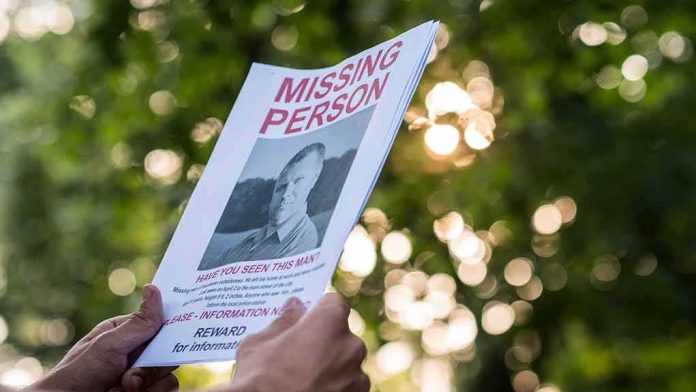
The disappearance of Nancy Guthrie is not a story that has resolved into an answer; it is a case that has stretched into a half-year vigil, and its persistence — not any single new clue — is the fact that matters most for understanding it.
Key Points
- Nancy Guthrie, 84, mother of “Today” co-anchor Savannah Guthrie, vanished from her Tucson-area home in the early hours of February 1, 2026, in what authorities describe as an abduction.
- Nearly six months later, no suspect or person of interest has been publicly named, and Savannah Guthrie has renewed her public appeal directly to whoever is responsible.
- The family has offered a $1 million reward, and the FBI has separately offered $100,000, for information leading to Nancy’s recovery.
- Purported ransom communications have circulated in media reports, but their authenticity and the specifics of any proof-of-life exchange have not been independently confirmed through public records.
- The case illustrates how a missing-person investigation involving a public figure’s family generates intense media repetition even while the underlying evidentiary record remains largely inferential.
What Investigators Say Happened
The known chronology is unusually well-documented for a case with so few resolved answers. Nancy Guthrie was dropped off at her home in Tucson’s Catalina Foothills neighborhood by a family member just before 10 p.m. on January 31, 2026. She was not seen again. Family members grew concerned the next day when she failed to appear for church and did not answer calls; they went to check on her and, unable to reach her, called 911 around midday. The Pima County Sheriff’s Department has since said publicly that evidence recovered at the home indicates she was taken against her will, with Sheriff Chris Nanos stating plainly, “We don’t know where she is,” and confirming that no suspect or person of interest had been identified.
That last point deserves emphasis, because it is the detail most easily lost amid six months of emotional coverage: as of the most recent reporting, this remains an open investigation without a named perpetrator, an arrest, or a court filing. Every account of an “abduction” rests on the sheriff’s characterization and evidence gathered at the scene — doorbell-camera irregularities, a disrupted overnight timeline, reported blood evidence at the residence — rather than on a resolved criminal case. That distinction matters not because the family’s account is doubted by law enforcement, but because the public narrative and the adjudicated facts are, as of this writing, two different things.
The Family’s Public Strategy: Pleading to an Audience of One
Savannah Guthrie’s public statements have followed a consistent arc since February, evolving from urgent alarm to something closer to a sustained, deliberate campaign of direct address. Her most recent video, posted around the six-month mark in late July 2026, spoke past the general public to a specific, unnamed listener: “It has been months since our mom was taken from us… Make the right choice. Help us find her. Tell us where to look for her”. Earlier messages requested unambiguous proof of life — “We need to know without a doubt that she is alive and that you have her. We want to hear from you and we are ready to listen” — a formulation crafted, evidently, to preempt manipulated audio or fabricated imagery rather than accept a claim at face value.
This is a recognizable pattern in long-running abduction cases: when investigators have no named suspect, families often become the primary channel of communication, using media appearances as a substitute for direct contact they cannot otherwise establish. The reward structure reinforces that channel. The family has offered $1 million for information leading to Nancy’s safe return, and the FBI has separately put up $100,000 for what it calls conclusive information, alongside a description of a person of interest. Rewards of that scale generate tip volume, but they also generate noise — a well-documented hazard in high-publicity missing-person cases, where financial incentive can draw opportunistic or false claims that investigators must sift before a genuine lead can surface.
Ransom Claims and the Limits of What Can Be Verified
Reporting throughout the spring and summer described purported ransom communications sent to media outlets, reportedly demanding payment and, in a later message, suggesting Nancy had died. Outlets including The Washington Post and the BBC referenced these communications and the family’s response to them, and Savannah Guthrie has spoken publicly about a willingness to negotiate — “we will pay” — while insisting on verified proof of life first. What the public record does not include, at least in the material reviewed for this account, is authenticated documentation of these notes: no released forensic analysis, no chain-of-custody disclosure, no law-enforcement confirmation tying a specific message to a specific individual. That gap is not evidence the notes are fabricated; it is simply evidence that the public has been given summaries rather than source documents, which is standard practice in an active investigation but leaves genuine uncertainty about how much of the “ransom note” narrative reflects a confirmed evidentiary thread versus a claim still being tested by investigators.
Nancy Guthrie, the mother of "Today" show anchor Savannah Guthrie, was reported missing from her home outside of Tucson, Arizona, on Feb. 1. Click the link below to see all of the photos ⬇️
📸 Provided by the FBI https://t.co/GEl9HROomG pic.twitter.com/KZJuPhfXOA
— USA TODAY (@USATODAY) August 1, 2026
Why This Story Reads as More Settled Than It Is
Few missing-person cases receive the volume of repetition this one has. NBC, CNN, ABC, the BBC, The Washington Post, The Wall Street Journal, The Guardian, and NPR have each carried versions of the same core details — a February 1 disappearance, a suspected abduction, an unidentified suspect, a family in “agony” — across dozens of stories spanning six months. That repetition serves a real public function: it keeps a tip line active and a case in view long after most missing-person stories fade from coverage. But it also creates what might be called a consensus effect, where a story told the same way by a dozen outlets starts to feel resolved even when the underlying facts have not moved. The honest accounting here is that very little has changed evidentially since the spring: no suspect named, no arrest, no confirmed recovery, and a family still asking the public — and, pointedly, one unnamed person — to come forward.
There is also a structural tension worth naming plainly: local and federal authorities do not always release information at the same pace, and that friction, reported elsewhere in coverage of the investigation, can slow public updates even when internal progress is being made. A quiet investigation is not necessarily a stalled one; law enforcement routinely withholds details precisely because premature disclosure can compromise a live case. But from the outside, silence and stagnation look identical, which is part of why the family’s periodic video appeals have become, in effect, the primary form of public accountability available in this case.
What Would Actually Move This Case Forward
Cases like this typically break in one of a few ways: a forensic match on physical evidence recovered near the scene, a cooperating witness who trades information for legal consideration, digital evidence tied definitively to a device or account, or a direct tip from someone who recognizes a detail investigators have withheld from the public. None of those breakthroughs has been publicly reported here. What has been reported is persistence — a family that keeps talking, a sheriff’s department that keeps working an open file, and a reward pool that keeps growing. Until an official case update supplies a verified timeline, an authenticated communication, or a named suspect, the honest posture for anyone following this story is the same one the Pima County Sheriff’s Department has already stated aloud: they don’t yet know where she is, and neither does anyone reporting on it from the outside.
Sources:
washingtontimes.com, youtube.com, today.com, npr.org, abcnews.com, wsj.com, washingtonpost.com