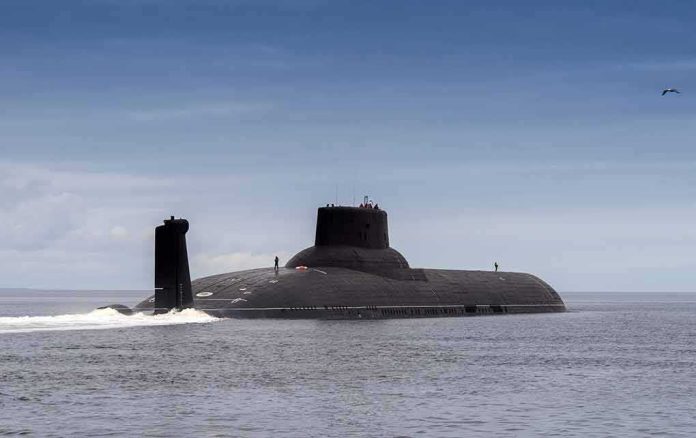
The real story is not that Britain has “lost” the Atlantic overnight; it is that the Royal Navy’s attack-submarine force has again exposed how brittle modern undersea readiness becomes when maintenance capacity, specialist labor, and strategic priorities collide. When all five Astute-class boats are alongside, the problem is not just optics — it is the narrowing of the UK’s most discreet conventional deterrent at exactly the moment Russian submarine activity and undersea contestation remain central to North Atlantic security.
Key Points
- The Astute-class fleet’s zero-at-sea period reflects a real readiness crisis, but it sits inside a broader cycle of recurring submarine availability problems rather than a single dramatic event.
- The bottleneck is structural: dry-dock capacity, specialist engineers, parts supply, and the demands of sustaining the ballistic-missile deterrent all pull in the same direction.
- The Ministry of Defence is not standing still; it has framed the problem as one of recovery and modernization, not collapse.
- The strategic consequence is serious even when the wording is overstated: without an attack submarine deployed, Britain loses a key tool for covert surveillance, anti-submarine warfare, and carrier protection.
Why Zero Availability Matters So Much
Attack submarines are not just another hull type. They are the Royal Navy’s quietest and most flexible strike and surveillance asset: the platform that can stalk adversary submarines, shadow surface groups, collect intelligence, and deliver Tomahawk land-attack missiles. That is why a period in which no Astute-class boat is at sea matters disproportionately. The UK can still defend its waters with surface ships, patrol aircraft, and allied coverage, but those substitutes do not replicate what an SSN does best: persistent, undetected presence beneath the sea.
This is also why the headlines sound apocalyptic while the underlying issue is more technical than theatrical. Britain has not suddenly forgotten how to operate submarines; it has run into a long-gestating maintenance geometry problem. Nuclear submarines require deep support infrastructure, specialist certification, dry dock availability, and crews trained to exacting standards. When those pieces are scarce, the fleet’s operational tempo falls faster than casual observers expect. The result is a visible gap at the point where readiness is supposed to be invisible.
The Structural Causes Behind the Bottleneck
The most persuasive reporting on the crisis points to the same cluster of causes: constrained infrastructure at Faslane and Devonport, shortages of experienced engineers and submariners, and the sheer maintenance burden imposed by a nuclear fleet that must be continuously safe, certified, and available. One account of the fleet’s state says the challenge is aggravated by limited dry-dock space and spare parts, and by the stripping of components from one boat to keep others usable; another describes a formal recovery plan meant to increase throughput at the yards.
That matters because submarine availability is not a simple count of how many boats exist. An Astute-class submarine can be commissioned, seaworthy, and still unavailable for deployment if it is trapped in a refit queue or waiting on a specialist system. The same logic explains why maintenance backlogs become self-reinforcing: if the yards are saturated, each delay pushes the next boat further back, while the demand to keep the Vanguard deterrent at sea consumes more of the same scarce support capacity.
There is also a human factor that is easy to understate. Submarine engineering is a niche profession, and the service’s operational tempo has long strained recruitment and retention. Once the pool of specialist labor thins, every repair becomes slower, more expensive, and more dependent on prioritization choices made above the dock floor. That is how a maintenance issue stops being maintenance and starts becoming force-structure policy by another name.
What the Evidence Actually Supports — and What It Does Not
The strongest evidence supports the claim that the Royal Navy has faced periods in which all five Astute-class attack submarines were alongside, leaving zero boats available for patrol. That is a meaningful operational fact, not an internet fever dream. It is also supported by recurring reporting over time, including earlier descriptions of severe availability shortfalls and a service under prolonged strain.
What the evidence does not fully support is the most absolute framing. The claim that the UK is “exposed” in a total sense goes too far, because the Ministry of Defence says British waters remain protected by “a range of assets,” and the Royal Navy’s submarine posture is only one part of a wider maritime defense architecture. Likewise, the argument that the problem is purely a consequence of underinvestment is plausible but not conclusively proven in the material provided; the reporting shows bottlenecks and a recovery plan, but not a complete financial autopsy linking each delay to a specific budget decision.
Even so, the official reassurance does not erase the operational reality. A defense posture can be partially intact and still strategically degraded. If the fleet has no attack submarine at sea, then the UK temporarily loses a covert hunter-killer presence in the North Atlantic, where Russian submarine activity, undersea surveillance, and pressure on cable routes continue to shape the security environment.
On the extraordinary warfighting readiness deficit of the U.K.'s Royal Navy. Zero attack submarines operational. In addition… https://t.co/3K5T8sleS4 pic.twitter.com/0WNk3cKN0y
— Tom Rogan (@TomRtweets) July 2, 2026
Why Russia Changes the Stakes
The Atlantic is not a generic theater; it is the central arena in which Britain’s undersea weaknesses are measured. Reporting on the Royal Navy’s new Atlantic strategy describes Russian submarines and related vessels probing near British waters and undersea infrastructure, while analysts quoted in that coverage argue that the Navy lacks enough vessels to cover the vast patrol problem effectively. That is the key strategic context behind the zero-availability debate: when the adversary’s submarine force is active, the value of your own attack boats rises sharply.
Former commanders and defense commentators have made the same point in sharper language. Lord West called the immobilized Astute fleet “unacceptable” in the context of protecting the ballistic-missile deterrent, and other commentators have argued that British anti-submarine warfare capability has been hollowed out by years of constraint. Those are not identical claims, but they converge on one conclusion: if the Royal Navy cannot surge an SSN when needed, then deterrence, surveillance, and carrier escort all become harder to sustain simultaneously.
The Official Response Is a Recovery Story, Not a Denial Story
The most important feature of the official response is that it does not wholly deny the problem. The Ministry of Defence has said it does not routinely comment on specific submarine operations and availability, but it has also stated that the waters are protected by other assets. Separately, reporting indicates that the service has launched a submarine operations recovery framework and related infrastructure work at Faslane and Devonport, which is the language an institution uses when it accepts that its throughput model has broken down and must be rebuilt.
That distinction matters. A denial would say the premise is false; a recovery plan says the premise is real enough to require structural repair. The careful reader should notice that the strongest counter-case is not “nothing is wrong,” but “the problem is being managed within a planned maintenance cycle and broader force posture.” The evidence does support that response to a degree: submarines are built around cycles of refit and certification, and HMS Anson’s maintenance period under the AUKUS rotational arrangement shows that not every period out of service is a crisis in the pejorative sense.
Yet a planned maintenance cycle does not neutralize the strategic cost of poor availability. If the cycle is so constrained that an entire attack-submarine class can vanish from patrol, then the issue has crossed from routine upkeep into force generation failure. That is the more sober diagnosis, and it is the one the evidence supports most strongly.
What This Means Going Forward
Britain’s submarine problem is not solved by a single dockyard project, one recovery framework, or a burst of political attention. The underlying question is whether the Royal Navy can restore enough maintenance capacity, labor depth, and production discipline to keep at least one Astute-class boat reliably available without robbing the rest of the force. Until that changes, the service will remain vulnerable to the same recurring pattern: an availability crisis becomes a public scandal, a recovery plan is announced, and the structural constraints continue to bite.
That is why the most useful way to read the “zero submarines at sea” claim is neither as propaganda nor as apocalypse. It is a stress test. It reveals how much of Britain’s undersea power depends on a narrow industrial base, a small pool of specialists, and constant prioritization of the deterrent over everything else. In a world where Russia keeps investing in undersea reach, that is not a comfortable place to be.
Sources:
19fortyfive.com, youtube.com, forcesnews.com, telegraph.co.uk, asa.gov.au, reddit.com, facebook.com, instagram.com