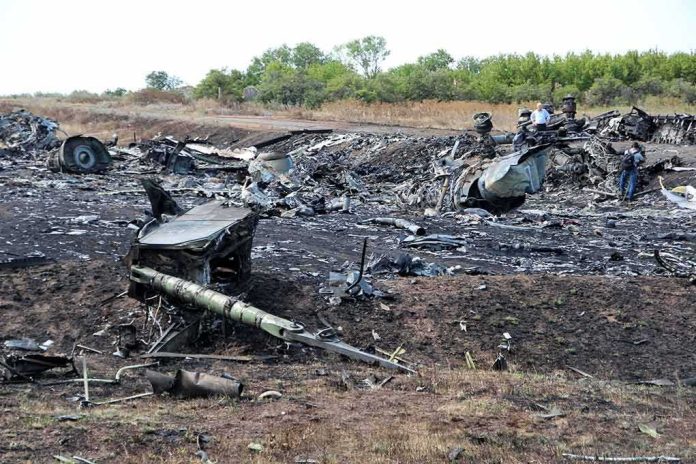
A fiery Missouri skydiving crash that killed 12 is now in federal hands, and families deserve real answers—not rumor, not spin.
Story Snapshot
- Twelve people died when a skydiving plane crashed near Butler Memorial Airport in Missouri during a Sunday flight.[1][4]
- Federal Aviation Administration (FAA) and National Transportation Safety Board (NTSB) investigators took control of the case to determine what went wrong.[1][4]
- Local officials say there is no sign of terrorism or crime, pointing to an aviation accident rather than an attack.[4]
- Past Missouri skydiving crashes show mechanical problems and pilot actions can be clearly proven when investigators release full reports.[1]
What We Know So Far About the Butler, Missouri Skydiving Tragedy
Missouri State Highway Patrol officers say a small private plane carrying skydivers crashed late Sunday morning near Butler Memorial Airport, about 65 miles south of Kansas City, killing all 12 on board.[1][4] Authorities report the aircraft had just taken off to carry people for a skydiving trip when it went down and burst into flames on or near airport property, with first responders arriving to find the wreckage fully engulfed in fire.[1][4] The victims were planning a simple weekend jump, not a combat mission, yet never made it home.
Officials on scene say the plane was operated by Skydive Kansas City and identified it as a Pacific Aerospace 750 XL, a single engine turboprop model widely used for skydiving and short-runway flying.[1] An acting airport manager and county emergency management director said the plane had just taken off, made a left turn, and appeared to be “losing power,” with the pilot likely trying to clear a nearby highway before the aircraft stalled, went nose-first into the ground, and caught fire.[1] No jumpers were found along the flight path, which suggests no one escaped before impact.[1]
Federal Investigators Take Over While Families Wait for the Truth
Missouri authorities quickly handed the case to federal experts, with the Federal Aviation Administration confirming it had personnel on scene and the National Transportation Safety Board set to lead the full investigation into the cause.[1][4][6] That handoff means the next real answers will come from technical evidence, not cable panels or social media speculation.[4] Investigators will study wreckage, maintenance records, weather, and any flight data to decide whether engine trouble, control failure, pilot actions, or some mix of factors brought the plane down.[1]
The Bates County sheriff publicly stated there was no evidence of criminal activity or terrorism linked to the crash, pushing back on rumors that began almost as soon as national outlets reported the death toll.[4][6] That matters in a media climate where many Americans no longer trust what they hear first. Officials urged people not to spread claims that could later prove wrong, warning that early stories often change once federal investigators complete their work and publish an official report.[6] Families now face a painful wait while Washington’s process runs its course.
Why Skydiving Crashes Need Hard Evidence, Not Instant Narratives
Past Missouri skydiving crashes prove that early guesses often miss the mark, but detailed federal reports can eventually pinpoint exact causes. In one prior Missouri case, investigators with the National Transportation Safety Board found that a twin engine skydiving aircraft crashed after takeoff when the right engine lost power because of a failed turbine blade, and the pilot did not keep enough airspeed to stay flying.[1] That official report listed both the mechanical failure and the pilot’s response as key reasons for the loss of life, giving families a clear, documented record.
🚨✈️ Breaking News | Missouri Skydiving Plane Crash
Tragic news out of Missouri. A skydiving aircraft carrying 11 skydivers and 1 pilot crashed near Butler Memorial Airport, resulting in the deaths of all 12 people on board.
Video footage from the scene shows a large emergency… pic.twitter.com/Sg8xtONthT
— The Knight News (@Knight981311) June 14, 2026
More recently, another Missouri skydiving flight crashed after federal officials said a jumper’s parachute struck the airplane’s tail, damaged the horizontal stabilizer, and caused the pilot to lose control.[4] In that event, all six jumpers and the pilot survived by getting out before the plane hit a field, but the aircraft itself was destroyed.[4] These cases show that skydiving aviation is not guesswork: federal investigators can trace failures down to parts, parachutes, and pilot decisions when they release full findings, even though those answers may take months or years to reach the public.
Sources:
[1] YouTube – First responders on the scene after 12 killed in Missouri plane crash
[4] Web – Crash of a De Havilland DHC-6 Twin Otter 100 in Sullivan: 6 killed
[6] Web – Skydivers escape plane crash in Missouri field – Facebook