The Trump administration is mobilizing more than 35 gigawatts of untapped backup power from data centers and private facilities to prevent blackouts during Winter Storm Fern, correcting years of grid weakness created by the previous administration’s reckless energy policies.
Story Snapshot
- Energy Secretary Chris Wright ordered grid operators to prepare 35+ gigawatts of backup generation from data centers to prevent rolling blackouts during Winter Storm Fern
- The move leverages emergency authority under Section 202(c) of the Federal Power Act, marking the first national-scale mobilization of private backup generation during an anticipated emergency
- Wright directly blamed Biden-era “energy subtraction policies and bureaucratic red tape” for creating grid vulnerabilities that now threaten American lives
- At least 14 states have declared emergencies as the storm threatens the Midwest and Northeast with potential power shortages and billions in economic damage
Trump Administration Takes Decisive Action Against Grid Emergency
Energy Secretary Chris Wright issued a directive on January 22, 2026, instructing the nation’s grid operators to prepare backup generation resources from data centers and major commercial facilities ahead of Winter Storm Fern. The Department of Energy identified over 35 gigawatts of unused backup capacity nationwide, representing a massive reserve that has sat idle while Americans faced blackout risks. Wright’s order requires Reliability Coordinators and Balancing Authorities to coordinate deployment of these resources as a last resort before declaring Energy Emergency Alert Level 3, which signals imminent rolling blackouts across affected regions.
Reversing Biden’s Energy Failures
Secretary Wright didn’t mince words when explaining the necessity of this emergency action. The Trump administration “will not stand by and allow the previous administration’s reckless energy subtraction policies and bureaucratic red tape put American lives at risk,” Wright stated. The directive comes one year after President Trump declared a National Energy Emergency via executive order, establishing the legal framework to address grid vulnerabilities created during four years of misguided green energy priorities. Winter Storm Uri in 2021 already demonstrated the catastrophic consequences of grid weakness, causing billions in economic damage when the Biden administration stood by while Americans froze in the dark.
Tapping America’s Hidden Power Reserve
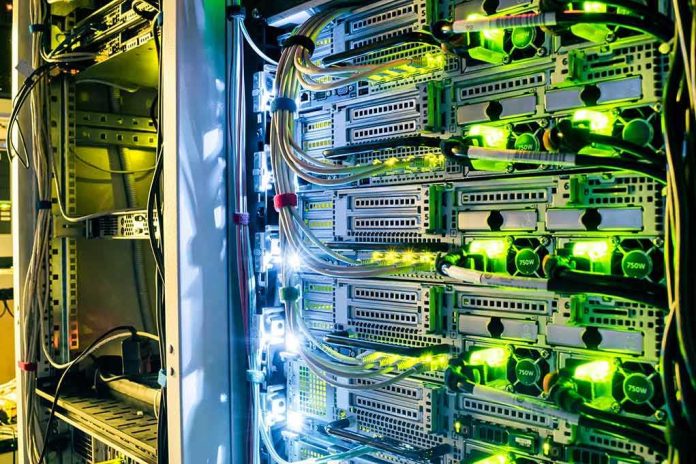
The United States operates between 4,000 and 5,000 data centers, with Virginia alone housing 190 facilities controlling over 3,000 megawatts of capacity. These centers maintain diesel backup generators for operational continuity but have never been systematically mobilized for grid support during emergencies. The DOE’s plan prioritizes data centers and commercial facilities like major retailers while protecting critical infrastructure including military installations and hospitals from early-stage dispatch requirements. Grid operators received instructions to deliberately prioritize backup generation deployment to achieve maximum benefit while balancing mission-essential functions, ensuring America’s defense and healthcare capabilities remain intact.
Economic and National Security Implications
Natural gas prices surged nearly three dollars in the week preceding the storm as energy markets anticipated massive demand spikes across the Midwest and Northeast. The DOE estimates that preventing blackouts during severe winter weather avoids billions of dollars in economic devastation, protecting businesses and families from the cascading failures that occur when power systems collapse. At least 14 states declared emergencies ahead of the weekend storm, with DHS Secretary Kristi Noem coordinating federal support with state and local leaders. This proactive approach stands in stark contrast to the reactive failures that characterized previous administration responses to grid emergencies.
Establishing New Precedent for Grid Reliability
This represents the first major deployment of Section 202(c) Federal Power Act authority to mobilize private backup generation on a national scale during an anticipated emergency. The action establishes a precedent that private backup capacity will be subject to grid emergency dispatch, fundamentally changing expectations for data center operators and commercial facilities. While leftist advocacy groups predictably complained about diesel generator emissions, the Trump administration correctly prioritized keeping Americans safe and warm over environmental virtue signaling. The policy signals a decisive shift toward utilizing existing capacity rather than wasting taxpayer dollars on unreliable wind and solar infrastructure that fails precisely when Americans need power most.
Sources:
Wright Ready to Use Powers to Dispatch Backup Generation for Winter Storm – RTO Insider
Leveraging Backup Generation Facilities During Energy Emergencies – U.S. Department of Energy