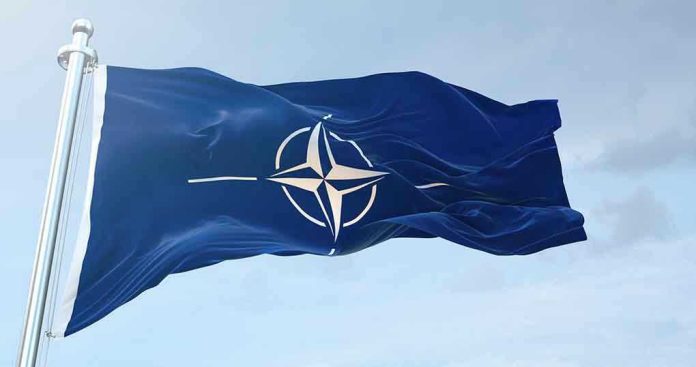
As Europe rallies around Greenland’s defiant leaders, President Trump’s push to secure the Arctic frontline has exploded into a test of sovereignty, NATO unity, and America’s ability to project strength without fueling another globalist backlash.
Story Snapshot
- Greenland’s parties unanimously reject becoming part of the United States, insisting “we’re a people,” not a product.
- Trump frames acquiring Greenland as essential to beating Russia and China in the Arctic and protecting U.S. security.
- Danish and EU leaders warn that any forced move on Greenland could shatter NATO and ignite a sovereignty crisis.
- Greenlanders’ resistance highlights how decades of globalism and decolonization rhetoric complicate America’s strategic options.
Trump’s Greenland Gamble and the Arctic Security Stakes
During his second term, President Trump has moved Greenland from punchline to priority, arguing that control of the island is critical if America is serious about outmaneuvering Russia and China in the Arctic. He points to existing U.S. military installations there and warns that, without American sovereignty, hostile powers will eventually dominate the sea lanes, resources, and airspace surrounding the world’s largest island. For viewers frustrated with weak borders, this Arctic front looks like the northern extension of the same security fight.
Trump’s language has been unmistakably hard-nosed: he has said the United States will “do something on Greenland whether they like it or not” and that if Washington cannot get the island “the easy way,” it will pursue “the hard way.” Those phrases have alarmed European elites, in part because they strip away the diplomatic sugarcoating globalists usually prefer. They also signal to American voters that the administration is willing to think in terms of territory, leverage, and long‑term strategic advantage, not just symbolic statements.
Greenland’s National Identity Clash with U.S. Strategy
Greenland’s elected leadership has answered in one voice, turning what Trump presents as a security and bargaining issue into a story about identity and decolonization. All five of the island’s political parties, spanning the spectrum, joined Prime Minister Jens-Frederik Nielsen in declaring that they “don’t want to be Americans” or Danes, but Greenlanders, and that their future “must be decided by the Greenlandic people.” That rare unity underscores how powerful national sentiment has become, even in a territory that still relies heavily on Danish subsidies and protection.
One lawmaker’s declaration on American television — “Greenland is not a product. We’re a people” — has become the slogan for this backlash. It taps into years of European and international rhetoric about self‑determination and post‑colonial dignity, language that global institutions helped entrench. Now, that same framing is being used to resist a U.S. strategic move that many conservatives see as common‑sense geopolitics. For Trump’s supporters, the situation is a reminder that elites spent decades teaching small nations to see every Western interest as “colonial,” and Washington is now paying that price, even when pushing back on China and Russia.
NATO, Denmark, and the Threat of an Alliance Showdown
Denmark’s government, which still holds responsibility for Greenland’s defense and foreign policy, has rushed to stand beside Nuuk. Danish Prime Minister Mette Frederiksen has warned that any U.S. attempt to seize Greenland by force could mean “the end of the NATO alliance,” a stunning statement from a country that has long relied on America’s security umbrella. European Union leaders have echoed that line, offering “full support and solidarity” to Greenland and pressing Washington to respect existing arrangements, even as they themselves depend on U.S. power to deter Moscow.
That reaction puts conservative Americans in a familiar bind. On one hand, they value NATO as a tool for deterring adversaries without endless new wars or blank checks. On the other, they have watched European governments lecture the United States on climate, migration, and “woke” policies while failing to meet defense commitments. When a Danish leader suggests a crisis over Greenland could end NATO, it sounds less like partnership and more like an ultimatum: accept European red lines or risk the entire alliance. That posture feeds the long‑standing conservative concern that U.S. sovereignty and security are constantly hostage to foreign sensibilities.
Congressional Crosscurrents and the Limits of U.S. Power
Inside the United States, Trump’s push has exposed sharp divides over how far America should go to secure territory in the national interest. Secretary of State Marco Rubio has emphasized that the administration prefers to purchase Greenland rather than invade, invoking America’s history of buying strategic real estate like Alaska. Some lawmakers, however, have drawn a hard line against any use of force, with figures such as Senator Rand Paul vowing to do “everything” to stop a military move. That tension reflects a broader conservative debate about projecting strength without drifting into open‑ended interventions.
For everyday conservatives already frustrated by inflation, border chaos, and globalist overreach, the Greenland standoff is another example of why they backed Trump in the first place: a president willing to treat national security as a concrete question of territory, resources, and leverage. Yet the fierce pushback from Greenland, Denmark, and European institutions shows how much ground has been ceded to narratives that cast any decisive American move as illegitimate. The outcome will shape not only the Arctic map but also how far a future America can go to defend its interests without being boxed in by the very international order it helped build.
Sources:
Trump’s Greenland push alarms Denmark and raises NATO questions
Greenland’s leaders reject Trump’s attempt to acquire island, insist on self-determination