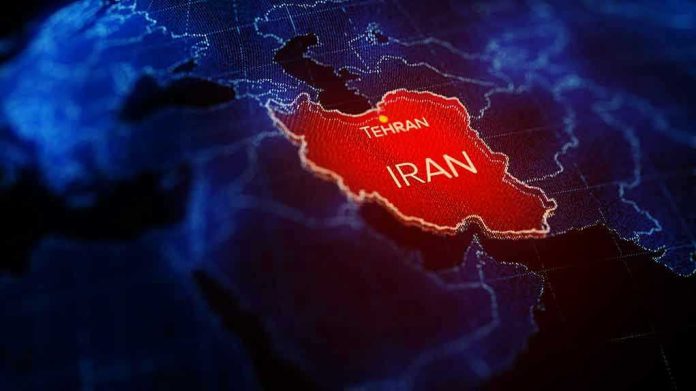
A spiraling economic collapse has pushed millions of Iranians into the streets, challenging a brutal regime that Washington coddled for years while lecturing Americans about “democracy.”
Story Highlights
- Iran is facing its largest uprising since 1979 as inflation, currency collapse, and repression ignite nationwide protests.
- Bazaar merchants, students, women, and youth are uniting against Tehran’s theocratic dictatorship across more than 100 cities.
- Security forces are responding with live fire, mass arrests, and internet blackouts to crush dissent.
- Years of Western appeasement and failed globalist diplomacy helped entrench this regime now turning openly on its own people.
Economic Freefall Sparks a Nationwide Uprising
Beginning December 28, 2025, ordinary Iranians reached a breaking point as shopkeepers in Tehran’s commercial centers shut their doors in protest over soaring prices, a collapsing rial, and mounting fears of bankruptcy. What started as marketplace strikes over bread-and-butter survival quickly spread to Tehran’s Grand Bazaar and cities across the country. Within days, demonstrations erupted in over one hundred locations, evolving from economic anger into an open challenge to the Islamic Republic’s rule.
By early January 2026, protests and strikes were reported in more than two dozen provinces, including major urban hubs and historically quieter regions. Demonstrators chanted directly against Supreme Leader Ali Khamenei and the clerical system, signaling a shift from reformist demands to calls for regime change. Security forces responded with tear gas, live ammunition, and sweeping arrests, yet unrest continued, revealing how deeply the economic meltdown has shattered public fear and regime credibility.
From Bazaar Strikes to Open Revolt Against Clerical Rule
The alliance forming in Iran’s streets is especially significant: bazaar merchants, students, women, and young people are standing on the same side against the regime. Bazaaris once formed a backbone of support for the 1979 revolution, but now many close their shops in defiance of the very system they helped empower. University campuses have reignited as centers of dissent, with students organizing protests and echoing nationwide calls for freedom and accountability.
Women, who led the 2022 Mahsa Amini protests, are again highly visible, pressing not only for relief from economic hardship but also for personal liberty and an end to enforced hijab rules. Their presence underscores a broader demand for dignity, choice, and basic human rights. Together, these groups highlight a multi-class, multi-generational movement that is no longer satisfied with incremental reforms but is openly challenging the foundations of clerical rule.
Regime Crackdown, Information Blackouts, and Mounting Casualties
Iran’s rulers are falling back on familiar tools of survival: lethal force, intimidation, and isolation from the outside world. Security forces linked to the IRGC, Basij, and police have deployed heavily in key markets, university areas, and restive neighborhoods. Reports indicate that dozens of protesters have been killed and over a thousand detained, though exact figures are hard to confirm as authorities throttle the internet, disrupt mobile networks, and pressure families to stay silent about victims.
Officials have ordered widespread closures of schools, universities, and businesses, often citing “cold weather” or “energy constraints” as pretexts. These shutdowns serve two purposes: limiting public gatherings and punishing economic life in areas viewed as hotbeds of dissent. Yet despite the dangers, protesters continue nighttime marches, flash demonstrations, and targeted actions against regime symbols, showing a determination that periodic crackdowns have failed to extinguish.
Decades of Misrule, Western Appeasement, and a Crisis of Legitimacy
The current unrest builds on a long history of Iranian protest movements, from the 1999 student demonstrations to the 2009 Green Movement and the deadly crackdowns of 2017–18, 2019, and 2022. Years of corruption, sanctions, and economic mismanagement have driven inflation above forty percent, gutted purchasing power, and pushed more families into poverty. Each wave of protest has exposed deeper cracks in the regime’s claim to moral and popular authority, particularly among younger, more connected generations.
For American conservatives, this moment also underscores the failure of past Western strategies that poured diplomatic energy into nuclear deals and photo-op summits while downplaying human rights abuses. Engagement that ignored the regime’s brutality and ideology helped entrench hardliners who now fire on their own citizens. The current administration in Washington faces a stark choice: side clearly with the Iranian people’s desire for liberty, or repeat the globalist habit of treating tyranny as just another negotiating partner.
Exiled opposition figures and diaspora communities are working to keep the world’s attention on events inside Iran, amplifying videos, casualty reports, and protest calls despite the blackout. Some protesters invoke exiled leaders and demand a referendum on Iran’s future political system, from restored monarchy to a secular republic. Whatever direction emerges, one reality is clear: repeated uprisings have severely eroded the Islamic Republic’s legitimacy, and each confrontation makes a return to the old status quo less likely.
Sources:
2025–2026 Iranian Protests – Wikipedia
Iran News in Brief – January 7, 2026 – NCRI
2026 Iranian Protests – Encyclopaedia Britannica
Iran Update, January 5, 2026 – Institute for the Study of War
Protests Rock Iran Amid Economic Crisis – Iran International