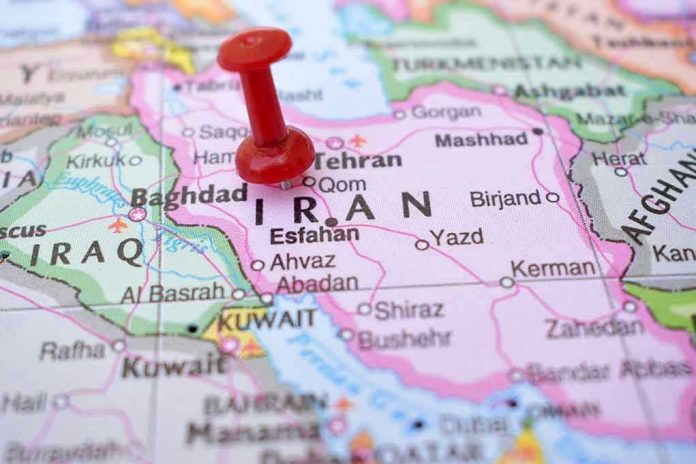
The Iranian protests have entered an unprecedented phase, with protestors fearlessly challenging the regime despite violent crackdowns.
Story Highlights
- Protests escalate in Iran, driven by economic collapse and political demands.
- Iranian citizens chant “Death to the Dictator” and call for the Shah’s return.
- Violent crackdowns have not deterred protestors, indicating diminished fear.
- The unrest is the largest since the 2022–2023 Mahsa Amini protests.
Iran’s Economic Collapse Fuels Unrest
Protests erupted in Iran in response to severe economic turmoil, including the collapse of the national currency, the rial. Since December 28, 2025, these protests have spread rapidly, beginning in Tehran’s Grand Bazaar. The demonstrations, initially focused on economic grievances, quickly evolved into political unrest with chants against Supreme Leader Ali Khamenei. This marks a significant shift from past protests, which were often quelled by violent state repression.
By January 2, 2026, the protests had expanded to major cities such as Isfahan and Shiraz. Despite facing tear gas and live ammunition from security forces, the demonstrators continued to challenge the regime. The scale and intensity of these protests are unprecedented since the Mahsa Amini protests of 2022–2023, which were centered on women’s rights but did not achieve such widespread geographic reach.
Merchant Strikes and Political Calls
One distinguishing feature of the current protests is the involvement of bazaar merchants and market workers, who have initiated strikes impacting Iran’s already struggling economy. These strikes, along with student mobilizations, have added a new dimension to the protests, demanding both economic relief and regime change. The slogans have shifted to monarchist sentiments, calling for the return of the Pahlavi dynasty, which shows a growing political boldness among the protestors.
The Iranian government’s response has been to enforce shutdowns under the guise of cold weather, a tactic seen as an attempt to suppress the protests. However, this has not deterred the protestors, who remain defiant. Such actions only serve to highlight the regime’s desperation to maintain control in the face of a unified opposition.
Impact and Future Outlook
The short-term impact of these protests includes significant disruptions to food distribution and economic activities. The confirmed deaths of at least four protestors have further escalated tensions. Funerals have become rallying points for anti-government sentiments, as chants of “Death to Khamenei” are heard across the nation. The international community, including the U.S. State Department, has voiced concerns over the Iranian government’s intimidation tactics.
In the long term, if the strikes continue to grow, Iran could see the largest unrest since the 1979 Revolution. The economic crisis, coupled with political demands for change, poses a significant challenge to the regime’s stability. The protestors’ fearless stance suggests a potential shift in the political landscape, as diverse groups unite against the current regime.
Sources:
Wikipedia: 2025–2026 Iranian Protests
WUNC: Trump and Iran Start 2026 Exchanging New Threats on Social Media
Iran International: Day Four Protests Spread with Regime-Change Calls