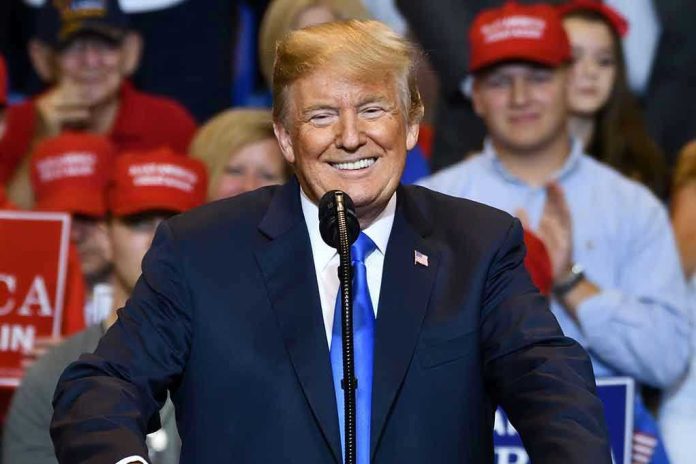
The revelation of Donald Trump’s past flights on Jeffrey Epstein’s private jet is stirring discussions anew, challenging perceptions and igniting debates on past associations.
Story Overview
- Donald Trump flew on Epstein’s jet at least eight times from 1993 to 1996.
- The flights were part of a broader social connection with Epstein.
- Trump’s association with Epstein ended in the early 2000s.
Trump’s Flights on Epstein’s Jet Revealed
Newly released files have unveiled that Donald Trump flew on Jeffrey Epstein’s private jet at least eight times between 1993 and 1996. These flight records, scrutinized by Manhattan federal prosecutors before Ghislaine Maxwell’s arrest, document trips that often included Epstein, Maxwell, and Trump’s family members like Marla Maples and his children. The flights connected key locations such as Palm Beach, Washington D.C., and New Jersey airports.
The disclosure sheds light on Trump’s past connections within the elite circles of the 1990s, a period marked by high-profile social interactions. While these revelations may stir conversations, it’s important to note that Trump’s relationship with Epstein ended by the mid-2000s.
The End of an Association
Trump and Epstein shared a social circle during the 1990s, attending various parties, weddings, and events together. However, their relationship soured between 2004 and 2007, culminating in Trump banning Epstein from Mar-a-Lago. This decision reportedly followed allegations of Epstein harassing a teenage daughter of a club member.
The ban signaled a decisive end to their association, reflecting Trump’s stance against misconduct and protecting family values, a stance that resonates with his conservative base.
Impact and Reactions
The resurfacing of these flight records has sparked debates across media platforms. While some view the association as a matter of past social engagements, others question its implications. For conservatives, this brings into focus the importance of individual actions aligning with moral values and the need for transparency among leaders.
As these discussions unfold, it’s crucial to consider the broader implications on public perception and the narratives that shape political landscapes. The dialogue underscores the need for accountability and integrity in public and private life.