A quiet move in Congress just handed Washington’s bureaucracy sweeping power over Pentagon workers, all in the name of “national security.”
Story Snapshot
- House‑passed protections for DoD civilians’ union rights were stripped from the final NDAA behind closed doors.
- A Trump executive order still lets the Pentagon treat huge parts of its civilian workforce as “national security” units with sharply limited bargaining rights.
- Hundreds of thousands of veterans working as DoD civilians now face more uncertainty over job protections and due process.
- The fight exposes a bigger battle over executive power, federal unions, and what “national security” really means.
How a Quiet Conference Deal Reshaped Rights for DoD Civilians
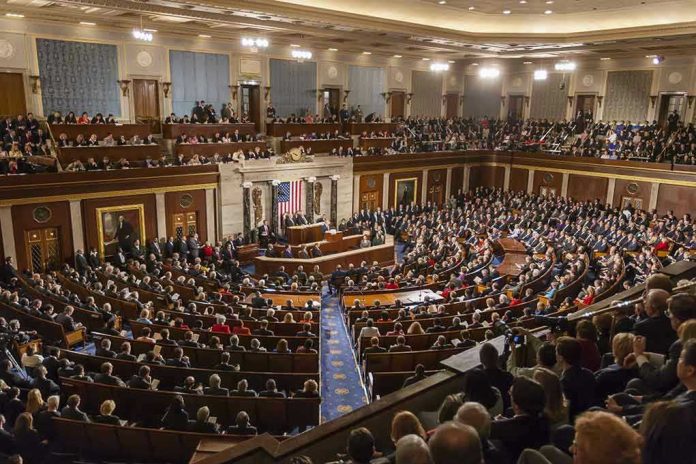
House lawmakers originally passed the annual National Defense Authorization Act with clear language saying the Pentagon could not spend a dime enforcing an executive order that strips most of its civilians of collective bargaining rights. That provision, backed by Democrats and a group of Republicans, would have effectively restored union protections for Department of Defense civilians by blocking implementation of the order inside DoD. When House and Senate negotiators met in conference, that language vanished from the final bill without any detailed public explanation.
The end result is that the NDAA, the must‑pass bill that shapes pay, policy, and programs for America’s military every year, moved forward without any shield for these workers. The Trump order itself remains untouched. Unions that represent DoD civilians say the conference outcome “fails to protect the basic workplace rights” of employees who maintain ships and aircraft, secure bases, and support service members every day. For readers who have watched backroom deals water down conservative priorities, the process here will feel very familiar.
The Executive Order That Redefined “National Security” Work
In March 2024, President Trump signed an order designating the Department of Defense and more than eighteen other agencies or components as “national security” entities for labor‑relations purposes. That label matters because federal law allows a president to exclude national security organizations from collective bargaining coverage. Historically, presidents used this power narrowly, targeting specific intelligence or investigative units. This order went much further, clearing the way for agencies to dissolve bargaining units, restrict union representation in grievances, and sharply curb contract negotiations for vast numbers of civilian employees.
Federal employee unions quickly warned that this was not a surgical change but a sweeping redesign of how the federal workforce is treated. They described the order as a systemic attack on federal unions and long‑standing civil service protections dating back to the Civil Service Reform Act of 1978. In their view, labeling broad swaths of the government as “national security” operations turns an exception into the rule, letting Washington management sidestep negotiated safeguards on discipline, scheduling, and workplace voice. Lawsuits have challenged whether the president exceeded statutory authority, but those cases take time, and the order remains in force unless Congress intervenes.
Why Some Conservatives Broke Ranks to Back the House Fix
While union politics usually split along party lines, this fight produced a small but notable bloc of Republican support for DoD civilians’ bargaining rights. At least sixteen House Republicans signed a letter urging Armed Services leaders to keep the protective language in the defense bill. They emphasized that the Pentagon’s civilian workforce includes roughly 315,000 veterans and handles critical functions like shipyard work, depot maintenance, logistics, cyber operations, and base support that directly affect readiness. From their perspective, stripping these workers of a voice would not strengthen national security; it risked undermining morale and retention.
Those Republicans framed the issue in terms that resonate with many constitutional conservatives: checks and balances, limited but accountable government, and respect for those who served. They argued that the NDAA language was a reasonable use of Congress’s power of the purse to prevent executive overreach inside a single department. Their stance also highlighted a tension inside the right: skepticism of public‑sector unions on one hand, and concern about concentrating too much unreviewed authority in the executive branch on the other. In the end, conference negotiators sided with preserving maximum management flexibility instead of codifying those guardrails.
What This Means for Readiness, Federal Power, and Working Americans
For DoD civilians on the ground, the stripped provision means continued uncertainty. Management can move ahead with plans to scale back or reshape bargaining units, limit representation in disputes, and revise work rules with less formal negotiation. In the short term, Pentagon leaders gain freedom to reorganize quickly, but they also risk deepening distrust among skilled tradespeople, technicians, and professionals who keep weapons systems running and installations secure. Unions argue that eroding due process and workplace input pushes experienced workers toward the exits at a time when technical talent is hard to replace.
In the long run, this episode sets a precedent that reaches far beyond defense. If such a broad use of the “national security” label stands, future administrations of either party could copy the model at other large departments, carving more of the federal workforce out of collective bargaining through executive action alone. Congress’s choice not to lock in limits here subtly shifts the balance of power toward the White House. For conservatives who value both strong defense and restrained government, that trade‑off raises serious questions about how and where constitutional accountability should draw the line.
Sources:
Provision to Restore Union Rights at DoD Dropped from Key Bill
Federal Workers, Unions Urge Senate and House Leadership to Protect Union Rights for DoD Workers
Provision to Protect DoD Civilians’ Union Rights Removed from NDAA
House-Passed NDAA Restores Union Rights for Defense Civilians; Senate Debate Still Underway