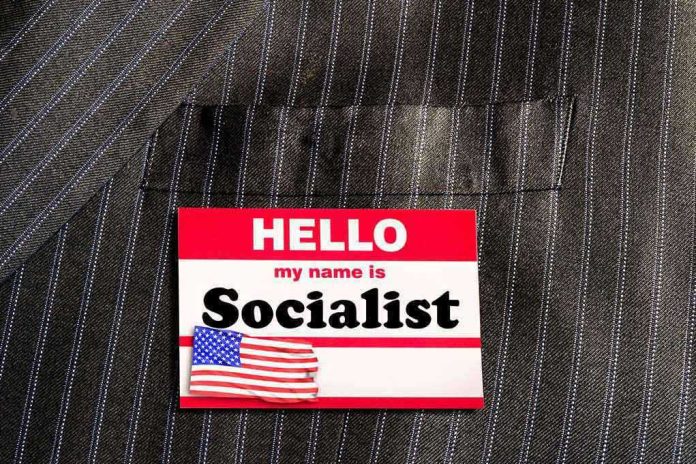
Nearly 100 House Democrats just refused to clearly condemn socialism, exposing how far their party has drifted from America’s founding ideals and warning every freedom‑loving voter what is coming next.
Story Snapshot
- House Republicans passed a resolution denouncing the “horrors of socialism,” forcing every member of Congress to pick a side.
- Nearly 100 Democrats voted no or “present,” signaling deep resistance inside their party to drawing a bright moral line against socialism.
- The resolution is symbolic but creates a permanent record that will shape 2026–2028 campaign messaging and voter trust.
- The vote highlights a growing divide between older anti-communist Americans and younger Democrats flirting with socialist ideas.
House vote exposes Democrats’ socialism problem
The Republican-led House moved a concurrent resolution “denouncing the horrors of socialism,” explicitly tying the ideology to historic regimes like the Soviet Union, Cuba, and North Korea and warning against importing those failures into American life.
The measure does not change law or spending but forces members to go on record about whether they stand with or against socialism as a guiding vision for the country. Nearly 100 House Democrats refused to support the resolution, voting no or merely “present.”
For conservative readers who lived through the Cold War, this number is staggering, because prior generations of both parties treated socialism and communism as existential threats, not trendy labels.
Anti-socialist resolutions have long precedent in Congress, particularly during the early Cold War, when lawmakers spoke bluntly about repression, breadlines, and secret police in one-party socialist states. Today’s split shows how far the Democratic coalition has shifted, with almost a hundred members unwilling to endorse a broad denunciation of those systems.
How the left redefined “socialism” while Democrats splintered
The modern Democratic Party has been pulled left for years by democratic socialists and progressives who champion big-government economic control under a softer brand.
High-profile campaigns by figures like Bernie Sanders, the rise of the Squad, and a wave of Democratic Socialists of America–backed candidates normalized ideas such as single-payer healthcare, tuition-free college, and aggressive state-led climate and labor policy as “democratic socialism.”
That shift created enormous pressure on party leaders every time Republicans force a vote that links socialism to historical tyranny.
Republicans crafted this resolution to highlight that tension, knowing that younger, more progressive Democrats are increasingly comfortable with the label while moderates in swing districts fear it.
Democrat factions responded differently: some leaders and frontline members voted yes to avoid being tagged as socialists in future attack ads, arguing they opposed authoritarian regimes but not mainstream social programs. Others voted no or present, claiming the resolution intentionally blurred together repressive one-party states with European-style social democracy and even with basic welfare programs like Medicare or Social Security.
Symbolic resolution, real political consequences for 2026–2028
On paper, the measure is nonbinding, meaning it does not rewrite the tax code, shut down agencies, or stop any specific spending program. Its power comes from the voting record it creates, handing Republicans a simple line for mailers, television spots, and digital ads: “Representative X refused to condemn socialism.”
For moderates trying to reconnect with working families hurt by inflation, open-border chaos, and reckless Washington spending, that is exactly the kind of sound bite they dread facing in a Trump-era economy focused on growth, security, and sovereignty.
Inside the Democratic caucus, the vote deepens existing fractures between leadership, who want to protect vulnerable incumbents, and activist-aligned progressives who see “anti-socialism” language as a weapon to kneecap their entire agenda.
Progressive members can now campaign as unapologetic socialists or democratic socialists, insisting they stood firm against what they call a bad-faith stunt. But that positioning lets Republicans put the whole party on defense in swing districts, especially among older voters and immigrant communities who escaped socialist dictatorships and know firsthand what centralized economic control does to freedom and faith.
What this means for conservatives, working families, and the Constitution
For conservatives who care about the Constitution, limited government, and the right to keep what they earn, the vote is a flashing red warning light above the Democratic brand. If nearly 100 members of Congress cannot bring themselves to condemn socialism in principle, it raises serious questions about how they will vote on future proposals that expand federal control over healthcare, housing, energy, and employment.
Even if the resolution does not directly change policy, it clarifies that a sizable bloc inside the Democratic Party sees socialism not as a danger to be avoided but as a label to be defended or redefined.
Going into the next election cycles under President Trump’s restored agenda of border security, economic nationalism, and deregulation, this contrast will only sharpen. Republicans can argue they are drawing a clear moral and historical line, standing with victims of socialist regimes and with American workers who want opportunity, not dependency.
Voters who are exhausted by inflation, cultural radicalism, and Washington’s appetite for control now have a simple question to ask every Democrat on the ballot: when socialism was on the line, which side did you choose?
Sources:
House Denounces Socialism as Democratic Socialist Lawmaker Meets With Trump
Democratic Socialist lawmakers respond to House anti-socialism resolution
Republicans Pass Rep. Maria Salazar’s Resolution Denouncing the Horrors of Socialism
House passes resolution denouncing the horrors of socialism
Roll Call Vote on House Resolution Denouncing the Horrors of Socialism
Official Roll Call 305: Denouncing the Horrors of Socialism
Nearly 100 Democrats Refuse to Condemn Socialism in House Vote