
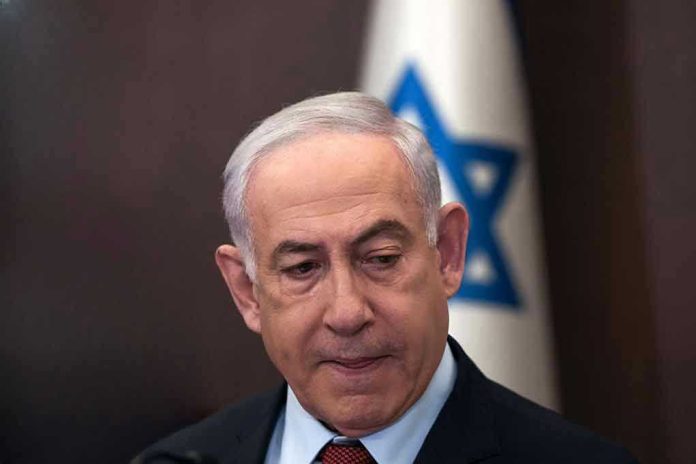
In an unprecedented move, Israeli Prime Minister Benjamin Netanyahu has requested a presidential pardon amidst ongoing corruption charges, sparking a constitutional and political crisis.
Story Snapshot
- Netanyahu seeks clemency as his trial continues, a first in Israeli history.
- U.S. President Trump supports the pardon, adding international pressure.
- Israeli citizens protest, fearing erosion of judicial independence.
- President Herzog’s decision could set a critical precedent for democracy.
Netanyahu’s Historic Pardon Request
On November 30, 2025, in a dramatic turn of events, Prime Minister Benjamin Netanyahu formally requested a presidential pardon from Israeli President Isaac Herzog. This request comes amid ongoing corruption charges, including bribery, fraud, and breach of trust. Netanyahu’s move marks the first time in Israeli history that a sitting prime minister has sought clemency during an active trial, underscoring the gravity of Israel’s current political and constitutional landscape.
The context of this request is shaped by significant international dimensions, notably the involvement of U.S. President Donald Trump. During his visit to Israel in October 2025, Trump publicly backed Netanyahu’s pardon. His subsequent formal correspondence with President Herzog emphasizes the geopolitical weight behind Netanyahu’s plea, adding layers of complexity to the decision Herzog now faces.
Constitutional Implications and Public Outcry
Legal experts, including Dr. Ronit Leveine-Schnur of Tel Aviv University, warn that granting such a pardon before conviction could undermine Israel’s judicial independence. The potential precedent could embolden future political figures to seek clemency in similar situations, thereby weakening the rule of law. Public sentiment in Israel reflects significant opposition, with citizens rallying against what many view as an erosion of democratic principles and judicial accountability.
President Herzog, tasked with navigating this unprecedented scenario, must weigh the constitutional implications against the mounting political pressure from both domestic and international fronts. His decision carries the potential to redefine the balance between executive authority and judicial independence in Israel, with lasting impacts on the nation’s democratic institutions.
Potential Outcomes and Global Impacts
Should Herzog grant the pardon, Netanyahu’s trial would be halted, potentially triggering a constitutional crisis and further protests. The decision would draw international scrutiny, questioning Israel’s adherence to democratic norms. Conversely, denying the pardon would affirm judicial independence but could invite increased political pressure from the Trump administration.
The implications of Herzog’s decision extend beyond Israel’s borders, signaling to the international community the nation’s commitment—or lack thereof—to democratic governance and the rule of law. As global observers watch closely, the outcome will undoubtedly influence Israel’s diplomatic relations and its standing in the international democratic community.
Sources:
The Jerusalem Post – Netanyahu’s Pardon Request